The Signal That Should Not Exist — Fragment
The Signal That Should Not Exist
Book 1 of the Fragment trilogy
In 2024, a private consortium called the Aetius Group launched a satellite into the dark and called it The Archive Satellite. The official story was harmless: a quantum data relay for deep-space communication. For forty-seven seconds, the satellite transmitted something no one has ever been permitted to hear in full. Then it went silent. Declared dead. Left to rot in orbit like every other piece of abandoned machinery we send up and forget.
That should have been the end of it. It was not.
Ten years later, a piece of drifting debris struck the dead satellite, and The Archive Satellite woke up.
It began to transmit on a frequency that should not exist — a signal that bypassed every encryption protocol on Earth and bled onto every screen at once. For exactly three seconds, the whole world looked up at the same impossible sentence: THE FUTURE IS NOT ONE LINE.
Then the signal stopped. When engineers traced it back to where The Archive Satellite was supposed to be, the satellite was gone. It had moved. It was now circling the Moon in a stable orbit that its propulsion system could never have achieved. Something had relocated it. Something had decided it belonged somewhere else.
This is where FRAGMENT begins — not with an explosion, not with an invasion, but with a sentence that should never have reached your eyes, and the quiet, crawling certainty that the night sky is no longer the one you were born under.
The Archive Satellite was never a camera. It does not show you the future the way a weather report shows you tomorrow. It records the quantum states of possible futures — the precise branch points where a single decision splits reality into a road that was not taken. It captures those moments as data fragments. Each fragment holds an entire future, complete and breathing, waiting to be lived.
When the satellite reawakened, it began to project those fragments down onto Earth. But the act of projecting is also an act of breaking. The technology shatters each fragment into pieces and scatters them across the planet like seeds dropped into soil that was never supposed to grow anything.
There are twenty-one known fragments. Twenty-one possible futures. Twenty-one stories that have not happened yet and may never happen — except that, somewhere, they already are.
The Archive Satellite did not stop at twenty-one. It is still transmitting. It is still fragmenting. No one knows how many futures it contains. No one knows who built it. No one knows why it woke up.
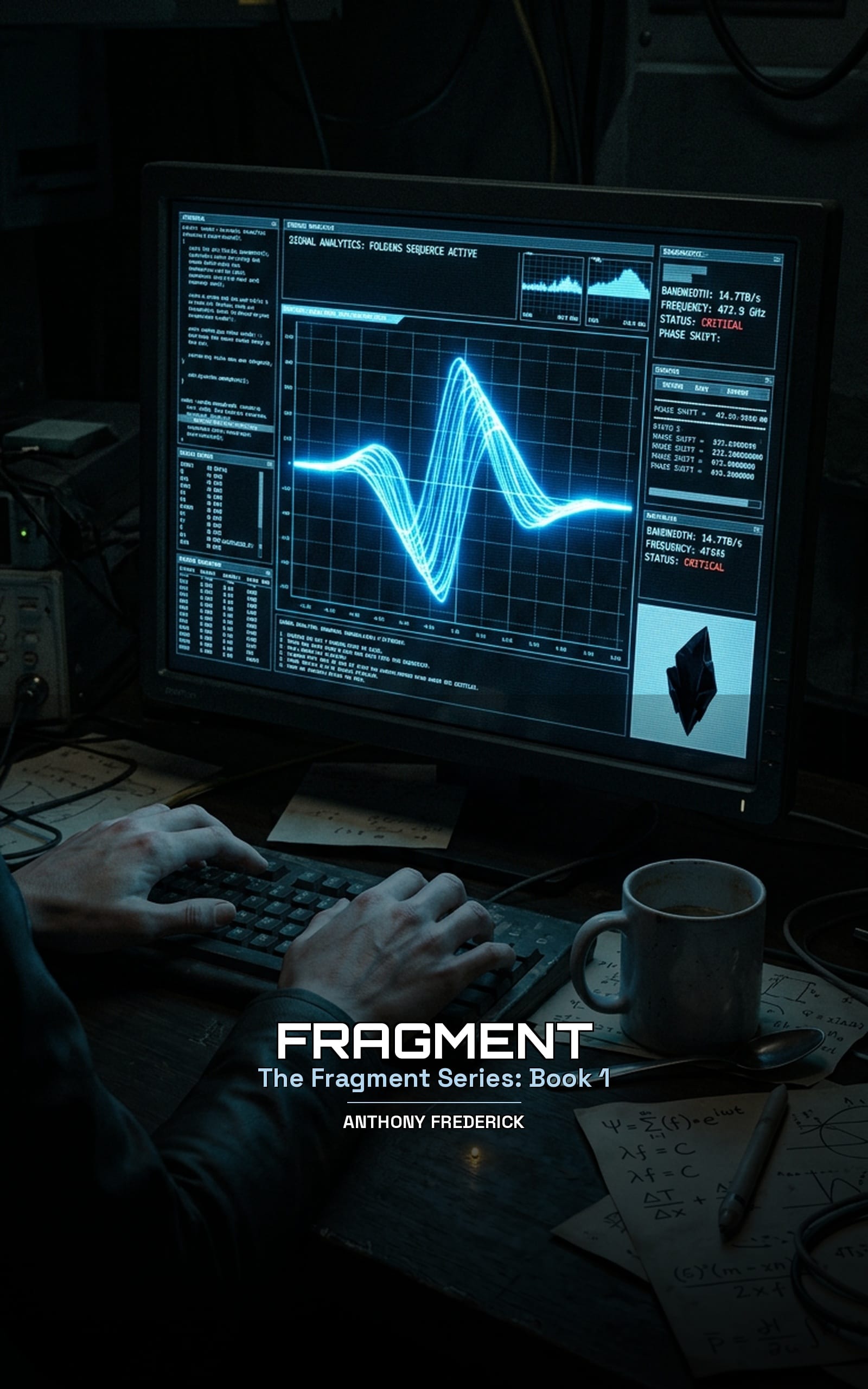
And here is the part that should keep you awake: the Aetius Group — the people who built the thing — disbanded the moment it went silent. Its members scattered. Some are dead. Some are missing. A few quietly founded a genetics company. A few joined a bureau whose name you would not recognize. They keep a signal monitor running in a basement office that technically does not exist, watching a screen that should have nothing left to say.
When The Archive Satellite awoke, that dead monitor came back to life with a second message, addressed to the only people who would understand it: DON'T FIND THE FRAGMENTS. THEY FIND YOU.
The fragment technology predates the satellite by at least forty years. The Archive Satellite was not the first attempt to do this. It was simply the most recent one to succeed — or to escape.
You are meant to feel something strange reading this. A small, cold pressure at the base of your skull. The sense that the timeline you are standing in right now is not as solid as it looks — that it is one of many, and that somewhere a version of you already chose differently. That the person you are at this exact moment is only the version who happened to take the stairs instead of the elevator, who answered the call instead of letting it ring, who is reading these words instead of the other hundred versions who are not.
That feeling is the point. FRAGMENT is not a story about the future. It is a story about the unbearable pluralness of it. Every choice you have ever made left a door open behind you. The Archive Satellite is the machine that walks through those doors and brings back what it finds.
Think about what a sentence like THE FUTURE IS NOT ONE LINE actually does to a mind that has been trained its whole life to believe in a single, fixed tomorrow. It is not a threat. It is not even a promise. It is a correction — the kind a teacher writes in red on a paper you thought was finished. And the teacher, in this case, is a satellite that should be dead, broadcasting from an orbit it could not have reached, using a frequency that should not exist.
The first book of the FRAGMENT collection is the signal that should not exist — the moment the sky stopped being a fixed thing and became a question. It is the record of what we were told, what we ignored, and what was already moving above us while we argued about whether any of it was real. It is the story of the Aetius Group's long silence and the single line of text that broke it. It is the story of a machine that was declared dead and then chose, on its own, to come home to the Moon.
Because the future sent a warning. And we ignored it.
That warning is still up there. The satellite is still transmitting. The fragments are still falling. And somewhere, one of them has already decided to find you.
There is a particular kind of dread that does not come from monsters or disasters. It comes from the rearrangement of something you thought was permanent. The floor does not fall away. The floor is revealed to have always been a thin skin over a depth you cannot measure. THE FUTURE IS NOT ONE LINE is that revelation in eight words. It does not shout. It simply tells you the shape of the world is not the shape you were taught, and then it goes quiet, leaving you alone with the new geometry.
FRAGMENT: Book One — The Signal That Should Not Exist. Step into the plurality. Find out what the sky has been hiding since 2024. The night you finish it, go outside. Look up. Count the things you are certain are still where they were this morning. The list will be shorter than it was.
The future is not one line. It never was.
Read it before the fragment finds you.
For anyone who's felt the future isn't a line — just fragments someone dropped where you'd find them.
<Free First Chapter
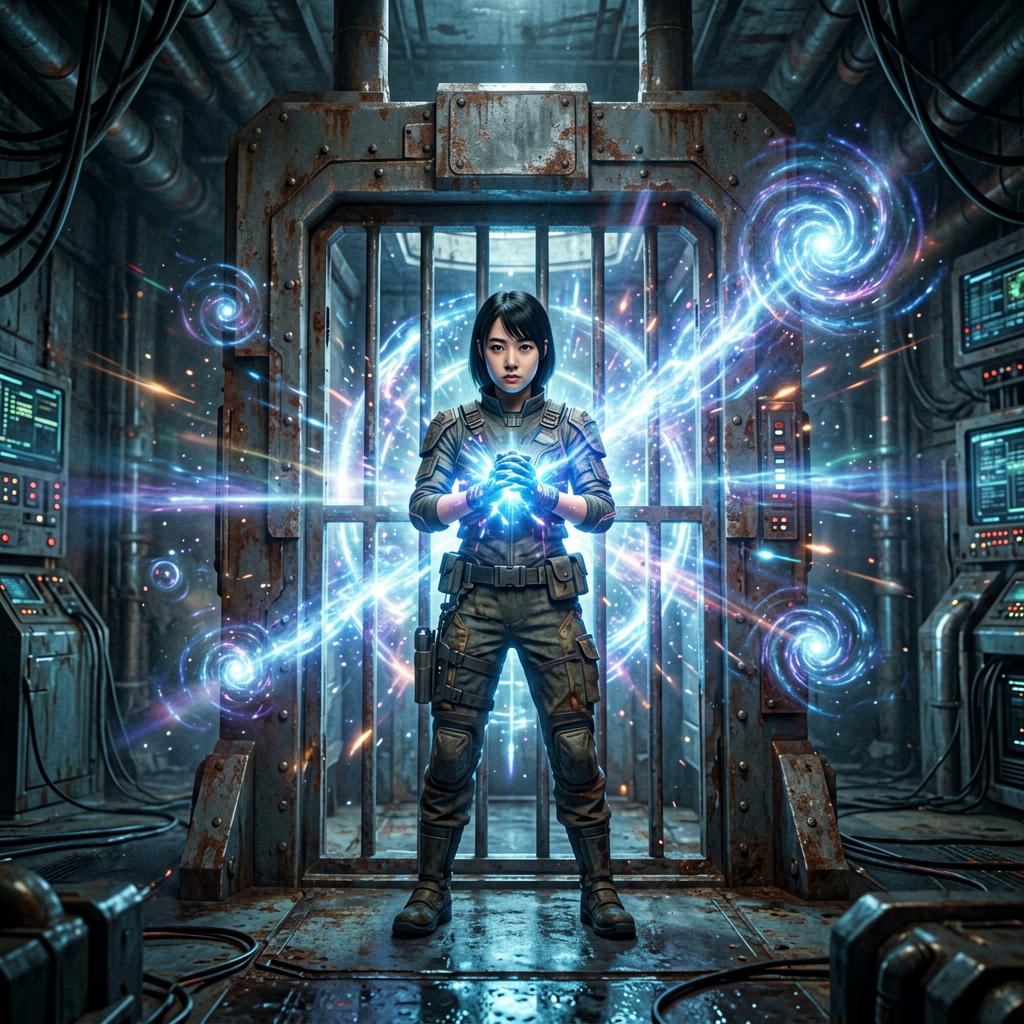
Maya Chen sat frozen in her chair, the ozone burn still sharp in her nostrils, watching her terminal pulse with data that should not exist. The transmission had ended three seconds ago. The room smelled of scorched copper. The men around her were already turning back to their coffee and their launch checklists, dismissing the impossible signal as a calibration glitch.
She moved without thinking. Her fingers flew across the keyboard, routing the data stream to her personal archive — seventeen layers deep, buried under project files that hadn't been touched in months. A career-ending violation. She didn't care.
The control room monitors flickered. Someone asked if the satellite was still transmitting. No one answered.
Maya sat back, her heart hammering against her ribs. She had designed the compression algorithms. She had built the architecture that could hold billions of possible futures in a quantum core the size of a fist. But she had never imagined the core would speak back.
She spent those 71 hours decrypting what she had stolen, her fingertips raw against the keyboard, the metallic taste of coffee and burnt copper never leaving her tongue. And when the patterns finally emerged — making no sense and perfect sense at once — she understood that the satellite had not failed.
It was a single sentence, buried in the quantum noise, encoded in a format that did not exist until Maya invented it during the decryption process:
Cascade City was the kind of place where people went to disappear. It was not a city so much as a region. Seven sectors stacked vertically along the Pacific coast, from the wealthy enclaves of Sector 1 to the flooded ruins of Sector 7, which had been underwater for thirty years and was now a labyrinth of repurposed structures and black-market networks and people who did not want to be found.
Maya lived in Sector 5 — high enough to avoid the flooding, low enough to avoid the attention of the corporate security forces that patrolled the upper sectors. Her apartment was a converted shipping container with a view of the Sector 6 rooftops and the gray water beyond. She had chosen it because the building's wiring was so old that no surveillance system could maintain a stable tap, and because the landlord accepted payment in cryptocurrency and did not ask for identification. The walls were always cold to the touch, the metal conducting the chill of the Pacific fog that rolled in every evening.
hr style="border:none;border-top:1px solid #ccc;margin:2rem 0">The Fragment Trilogy