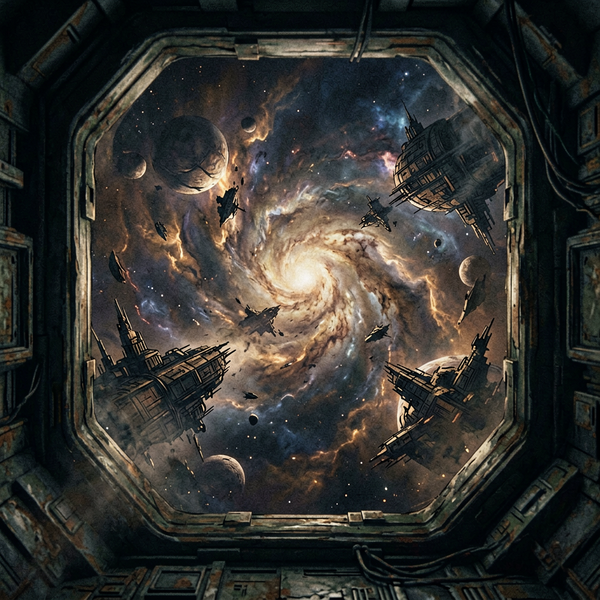
Frame Dragging and Time Dilation: The Real Physics
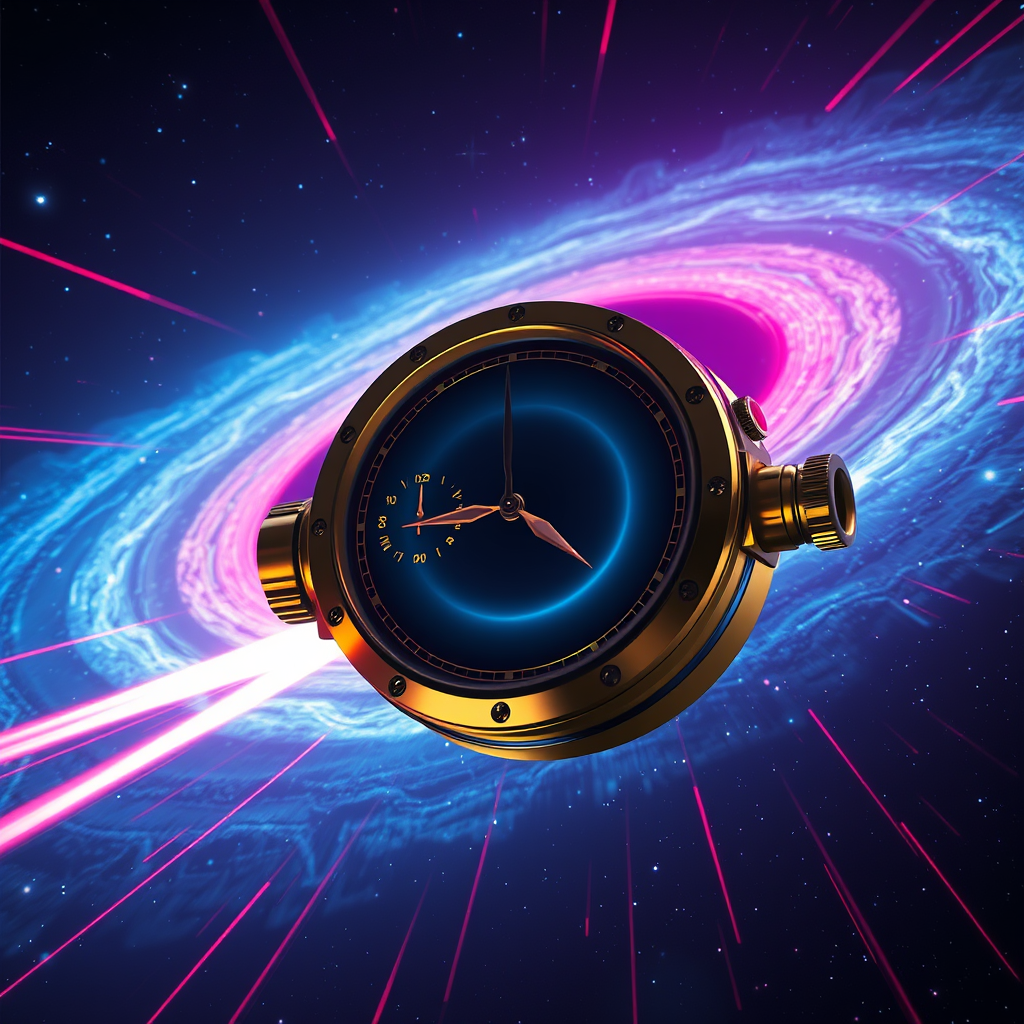
Frame Dragging and Time Dilation: The Physics Behind Temporal Mechanics
The Stolen Stream doesn't borrow from relativity — it weaponizes it. Frame dragging and time dilation aren't sci-fi window dressing in this universe; they're the governing laws that make temporal capitalism possible, limiting how much time can be stolen and at what cost for those who dare to jump.
What Frame Dragging Actually Means for the Stream
Frame dragging — the Lense-Thirring effect — describes how rotating massive objects drag spacetime along with them. In our world, NASA's Gravity Probe B confirmed Earth drags spacetime at 0.39 arcseconds per year. Around the The Fracture Zone, that effect is amplified by orders of magnitude, creating rotational gradients that shift unpredictably.
The Consortium mapped these gradients after the first breach, discovering the Stream doesn't sit still. It rotates, twists, and changes its temporal profile based on the rotation of the anomaly itself. This is why jump technicians must constantly recalibrate — the frame dragging in the Stream isn't stable, and a route that worked yesterday might shear you across three different time signatures today.
Time Dilation as the Engine of Temporal Debt
The 10:1 temporal toll isn't arbitrary — it mirrors real gravitational time dilation near black hole event horizons. What makes the Stream unique is that this gradient isn't tied to mass but to access. The Masters of the Second don't create time; they exploit the differential between the Stream's dilated interior and the outside universe, borrowing years from the fast-flowing regions and repackaging them as temporal debt instruments.
This is where temporal capitalism reveals its physical limit. You cannot generate time without a gradient to exploit. Every unit of temporal currency represents a real asymmetry between two reference frames — and that asymmetry has consequences.
The Biological Tax on Jump Technicians
For jumpers like Voss, time dilation isn't theory — it's a biological audit on every transition. When you spend hours in a slower-flowing Stream region only to return and find days have passed, your body registers the mismatch at the cellular level: mitochondrial stress, telomere erosion, the distinctive stream-sickness that veterans learn to hide.
Kai Eschendorf's immunity isn't magical — it's a congenital temporal adaptation documented in The Stolen Stream: Book 1. He doesn't resist the physics; he rides the frame dragging like currents, sensing rotational shifts experienced jumpers miss entirely. This makes him invaluable to the Consortium and hunted by anyone who understands what his DNA could mean for temporal debt markets.
Frame Dragging and the Architecture of the The Fracture Zone
The The Fracture Zone itself exhibits measurable spacetime vortexing around its perimeter — a signature the Consortium's research teams still don't fully understand. This isn't a stable wormhole; it's a rupture with internal physics that change based on the rotation of the anomaly. Routes that worked during one calibration window collapse in the next.
For deeper exploration of how temporal debt and biological costs intersect, see the full discussion in The Stolen Stream: Book 2. The physics behind the Stream is the physics of power — and in this universe, whoever controls the frame dragging controls the flow of time itself.
More from the The Stolen Stream universe: The Stolen Stream Universe | The Stolen Stream Book 1 | The Stolen Stream Book 2
Related: Best Time Travel Sci Fi Books · 10 Sci Fi Worlds That Feel Real And Why · Time Travel Physics Books