What Is a Frozen Light Singularity? The Real Physics Behind The Stolen Stream's Time Engine

The Engine That Bends Time
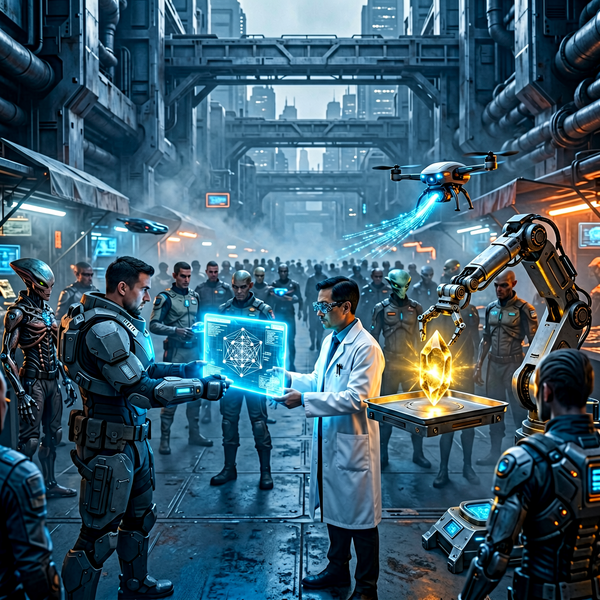
Time isn't measured in The Stolen Stream — it's mined. And the frozen light singularity at the core of that economy doesn't just power ships; it creates the very resource the Consortium hoards, trades, and weaponizes. But the physics behind this device is darker than any fiction.
How a Frozen Light Singularity Works
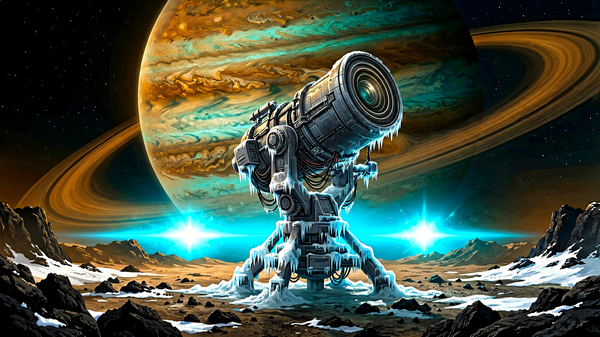
A frozen light singularity is a self-contained pocket of spacetime where photons are slowed to near-zero velocity while their energy is harvested as a stable power source. In the Stolen Stream universe, the 1588 device — the original frozen light singularity — doesn't generate power. It generates time itself, forming the reservoirs that the Consortium and the Eschendorf family fight over like cartels over oil fields.
Think of it as a battery that charges temporal potential. The Consortium uses these singularities to fund jump operations, enforce temporal debt contracts, and sustain the entire underground economy of stolen years.
Real Physics: Slow Light and Bose-Einstein Condensates
The frozen light concept is grounded in real science. In 1999, Harvard physicist Lene Hau slowed a beam of light to just 17 meters per second using a Bose-Einstein condensate — a cloud of sodium atoms cooled to near absolute zero. By , her team stopped light completely, storing it in the BEC and releasing it later unchanged.
The Stolen Stream imagines the extreme endpoint: a singularity-scale BEC that freezes light indefinitely and extracts usable temporal energy from the interaction between frozen photons and spacetime itself. This is the physics that makes the temporal toll possible.
The Signal Tax: Why Frozen Light Costs Time
The frozen light singularity operates on a brutal law: for every year of usable time extracted, ten years of biological time are consumed by the operator. This isn't arbitrary. Real thermodynamics demands imperfect energy conversion. The 10:1 ratio is the universe's way of balancing the books — a second-law-of-thermodynamics penalty applied to time itself.
This is what makes the frozen light singularity dangerous. It's not a power source. It's a deal with spacetime. Every jump, every temporal loan, every year stolen from the Stream carries a cost that someone must pay.
To understand how this debt system works in practice, read .
Kai Eschendorf's Paradox
Kai Eschendorf is the living contradiction of the 10:1 model. He's lived 437 years in just 28 biological years — a ratio that should be impossible by any frozen light singularity standard. His existence suggests either a flaw in the physics or a secret about the 1588 device that the Consortium has never disclosed.
Is Kai a biological singularity himself? A living frozen light engine running on something other than stolen time? The answers lie at the heart of The Stolen Stream's central mystery. Explore this further in .
Frozen Light and Temporal Debt
Temporal debt — borrowing future years in exchange for present ones — only works because the frozen light singularity enforces the contracts. Each debt is backed by a quantum of frozen light, a stored-time reserve that can be called in at any moment. Default on your debt, and the singularity reclaims your remaining years at the 10:1 rate.
It's not banking. It's physics with teeth.
The frozen light singularity is the engine that drives The Stolen Stream. It's where real slow-light physics meets speculative consequence — and where every character learns that time is the one resource you can never truly own.
More from the The Stolen Stream universe: The Stolen Stream Universe | The Stolen Stream Book 1 | The Stolen Stream Book 2
Related: Temporal Debt Borrowed Years Currency · Ledger 002 · Redactors Times Enforcers Stolen Stream