hidden details and symbolism

The Anteroom’s Geometry: More Than a Waiting Room
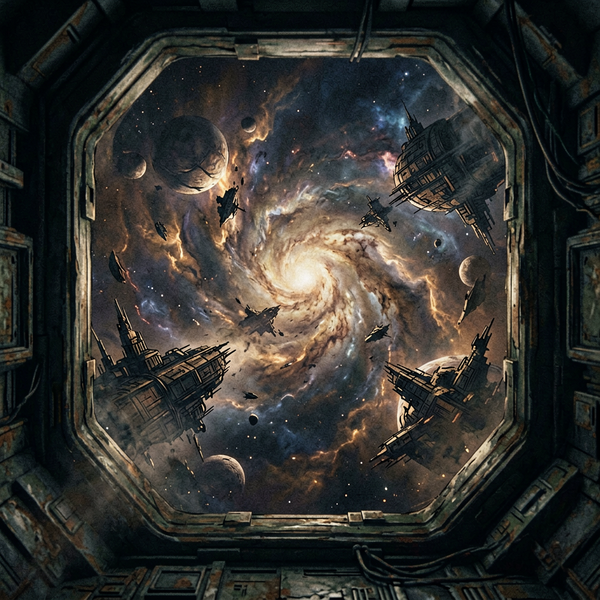
The Anteroom is not designed for comfort—it is engineered for disassembly. The golden haze that swallows the ceiling isn’t ambient lighting; it’s the visual echo of the Tower digesting memories. Non-Euclidean walls don’t merely confuse your eyes—they rewire your spatial reasoning, stripping away the cognitive crutches you brought from outside. By the time you touch the Wall of Names, you are no longer the person who walked in.
This is why the military perimeter never breaches the Anteroom. Soldiers who enter don’t come back the same, even if they leave. The Threshold Rejection process isn’t a filter for courage or intelligence—it’s a scythe for certainty. Only the utterly desperate survive the culling, because only they have nothing left to lose that the Tower could take.
For The Liar, this space is a double trap. He enters carrying a false identity, but the Anteroom doesn’t care about your story—it cares about your resonance. His internal fracture mirrors the impossible angles around him, and that symmetry is what allows him to see what other entrants miss: the Inscription at the base of the Wall of Names isn’t a warning. It’s a promise.
---
The Wall of Names: The Ledger That Breaks Kings
The Wall of Names is not a monument. Monuments honor the dead. The Wall is a ledger—an active, living record that updates in real time as lives are lived and ended. It arranges names in no discernible order because chronology and fame are irrelevant to the Tower. Every entrant, every historical figure, every forgotten peasant occupies the same stone. There is no VIP section, no headstone for the famous, no footnote for the obscure.
This chaos is the real test. Most entrants search for their own name, hoping for validation, and find only vertigo. The Liar does something different: he claims a name that never existed. When his hand presses the stone and the light ripples outward, he doesn’t just trigger the Anomaly—he proves that the Tower’s ledger, for all its cold precision, cannot detect a lie it has never heard before.
This is the hidden meaning behind the false name. The Anomaly isn’t a bug in the system—it’s a blind spot in omniscience. Absolute knowledge fails the moment it encounters a variable it was not designed to imagine. The Tower catalogues existence, but it cannot process invention. And that gap is where The Liar builds his survival.
---
The Floor Trials: Mirrors, Not Obstacles
Each floor of the Tower is often mistaken for a standard trial—solve the puzzle, survive the trap, advance. But look closer at the five confirmed floors documented in the early ascents:
- The Hall of Echoes: Tests not your agility but your relationship to your own voice.
- The Gallery of Stillness: Forces you to witness moments you cannot change.
- The Crucible of Debt: Weighs what you owe against what you took without asking.
These are not obstacles. They are mirrors held at angles that reveal your own unrecognizable self. For most entrants, the Tower kills them with their own history. For The Liar, it sets him against the only person he cannot outrun: the one he pretends to be.
---
To understand how the Anomaly spreads beyond the Anteroom into the deeper floors, read the full account in . For the complete architectural breakdown of the Tower’s Arrival and the global response to its impossible structure, visit .
More from the The Stolen Stream universe: The Stolen Stream Universe | The Stolen Stream Book 1 | The Stolen Stream Book 2
Related: The Stolen Stream Why This Time Travel Fiction Series Redefines Hard Sci Fi In 2026 · Hidden Details And Symbolism 2 · Complete Lore Guide 12