Level Zero: Grid System & Post-Earth Economics Explained
The Grid Is the Economy
When Humanity fractures across timelines, economics doesn't collapse—it mutates into a biological audit. Every temporal maneuver extracts a toll paid in chronological integrity, and that cost is the only currency that matters.
The 10:1 ratio is non-negotiable: ten units of displacement for one unit of lifespan. This isn't background lore; it's the balance sheet against which every transaction, migration, and war is measured. No central bank can arbitrage it. No algorithm can cheat it.
The Integration Tax as Economic Bedrock
In Level Zero, Post-Earth means pricing risk in heartbeats. A colony ship's jump trajectory isn't calculated in fuel mass—it's calculated in years of the captain's life. Trade routes are denominated in crew lifespan expenditure. The Grid System, Level Zero's planetary-scale infrastructure, exists solely to minimize these expenditures, routing temporal traffic through corridors where the toll extracts the fewest years per light-year gained.
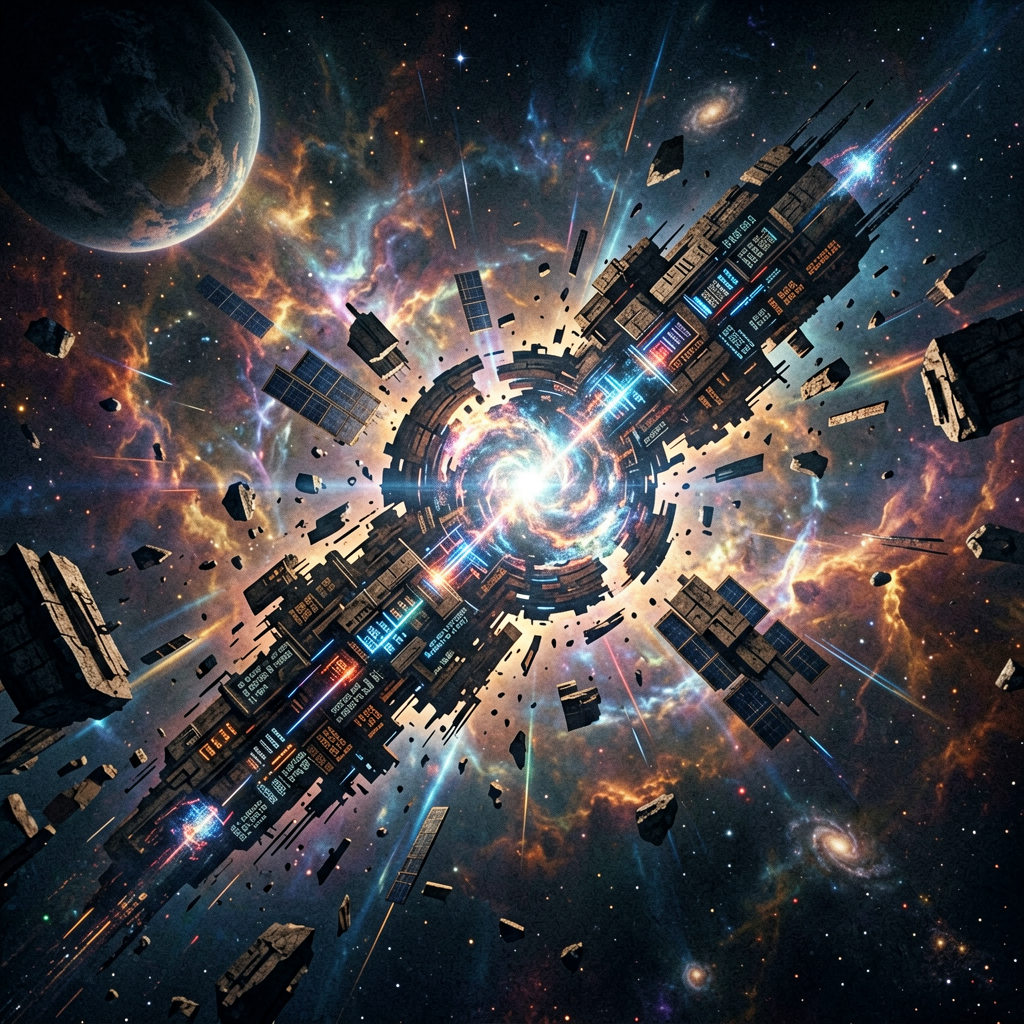
The Grid isn't a network of roads or data cables. It's a lattice of stabilized temporal corridors, each calibrated to reduce the 10:1 toll's effective bite. Key architectural principles govern its operation:
- Corridor grading: Routes classified by toll-efficiency. Grade Alpha corridors cost 0.08 years per 10 light-years; Grade Delta cost 0.The difference compounds across generations.
- Node cities: Settlements anchored at corridor intersections. Their wealth isn't GDP—it's temporal surplus, the accumulated lifespan savings of routing traffic through their junctions.
- Maintenance castes: Specialized lineages who inherit the biological debt of Grid upkeep. Their shortened lifespans are the hidden subsidy keeping the network operational.
In the first novel, a Grade Beta corridor degradation event cost a node city 14,000 collective years in a single quarter—a depression measured in funerals, not foreclosures. For the deeper mechanics of this ecosystem, establishes the foundational catastrophe.
Post-Earth Valuation Models
With Earth gone—the "Post-" is literal—traditional asset classes vanish. No real estate when planets are waystations. No commodities when matter replicators run on temporal energy. Value concentrates in three assets:
- Chronological reserves: Banked lifespan—years not yet spent on travel. The only liquid asset that appreciates simply by not being used.
- Corridor equity: Ownership stakes in Grid segments. Pays dividends in toll rebates—fractions of a year returned per transit.
- Anchor contracts: Legal claims to future node-city founding rights. Speculative, but the only way to "go long" on civilization's expansion.
Financial instruments here are brutal in their transparency. A futures contract on a Grade Gamma corridor upgrade pays out in months of life. Default means the counterparty literally dies sooner. There are no bailouts—only biological bankruptcy.
To explore how these economic laws cascade through interstellar politics and personal survival, charts the rise of node-city sovereigns who weaponize toll gradients as instruments of control.
More from the Level Zero universe: Level Zero Universe | Level Zero Book 1 | Level Zero Book 2
Related: Surveillance State Sci Fi Orwell Level Zero · Complete Lore Guide 5 · World Explained 3