
Scar Zone Bazaar Guide: The Multi-Era Marketplace
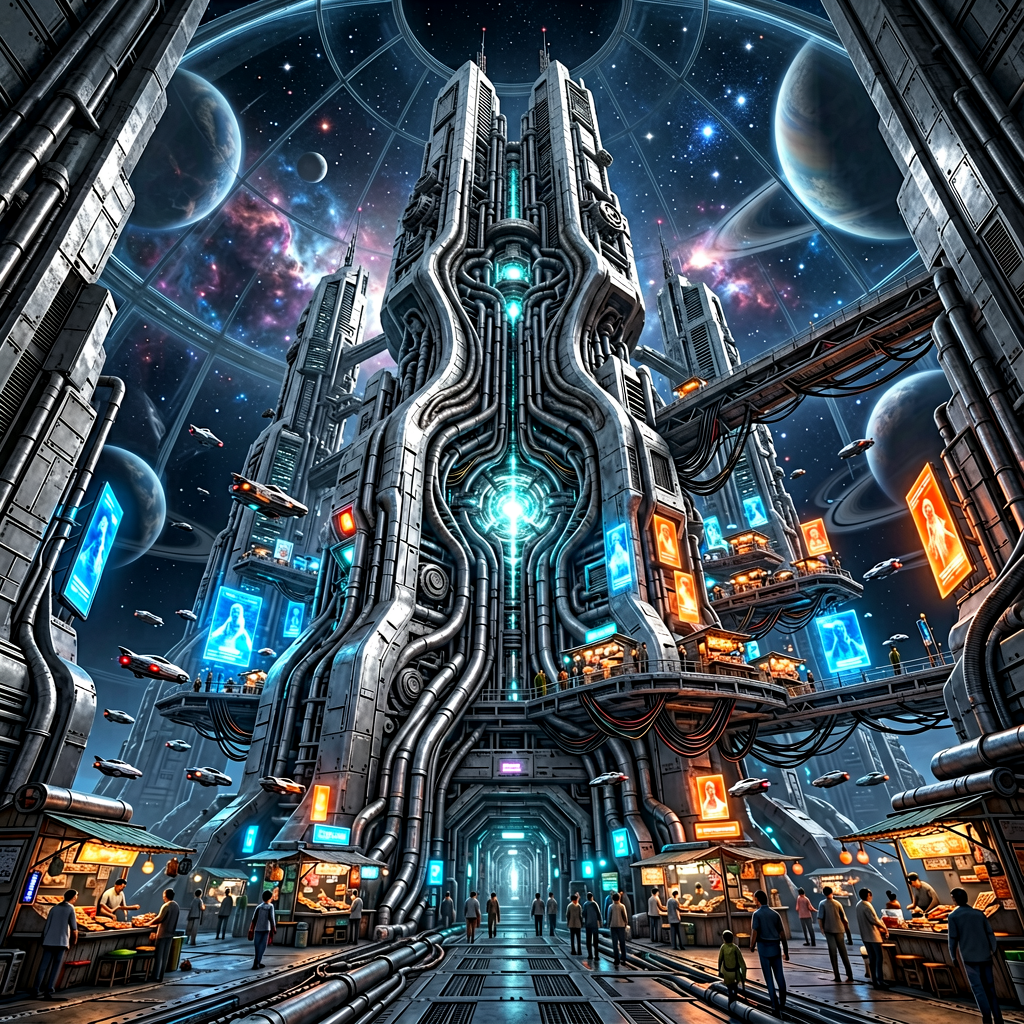
The The Fracture Zone Bazaar: A Market Built on Broken Time
Forty square kilometers of fractured chronology, and the most dangerous deal in human history is struck not with bullets, but with chronal credit—the only currency that matters where centuries bleed together. In the heart of the The Fracture Zone, a shattered wound in Worcester, Massachusetts, the Bazaar is a multi-era trading post where a Victorian haberdasher might haggle with a 23rd-century synth-merchant, and where a bad trade can cost you years you will never get back.
This is not a market. This is temporal capitalism at its rawest—and it has no mercy.
Where Three Eras Collide
The Bazaar occupies the intersection of three overlapping temporal strata: a cobblestone fragment of 1880s industrial Worcester, a pocket of 1990s suburban rot, and a splinter of a 23rd-century city that may never actually exist. These layers press against one another, creating impossible geography—a gaslit Victorian street feeding directly into a neon-lit arcade that hums with unknown energy.
The Bazaar has no fixed perimeter. It expands and contracts as the The Fracture Zone's chronal fields shift, sometimes by the hour. A vendor who stakes their claim on solid ground today may find their goods suspended over Memory Canyon tomorrow. Only the Brass Pillars—six-meter clockwork anchors driven into the bedrock by the Eschendorf family in —keep the local timeline from unraveling completely.
The Merchants of Every When
The Bazaar's vendors are drawn by a single force: profit, unbound by linear time.
Victorian Antiquarians (1840–1890): In frock coats and brass chronometers, they trade in objects that have absorbed chronal resonance from the The Fracture Zone's exposure. A pocket watch that has survived three centuries carries more worth than one that has seen only one lifetime.
Future-Tech Syndicate (2170–2250): Unknown beings whose faces are veiled by holographic masks. They sell power cells that never drain and fabrics that self-repair. Their price? Biological time—hours, days, years—extracted through compact hand terminals.
The Present-Day Scavengers: Locals who brave temporal cracks to recover artifacts—a 19th-century letter found in a mailbox, a 23rd-century data chip from a parking lot. They trade for money, medicine, or passage out of the Zone.
Eschendorf Representatives: Their suits look identical across every era. They monitor for violations of the family's temporal monopoly, buy up the most valuable chronal assets, and enforce the 10:1 toll on anyone attempting unauthorized jumps.
Temporal Arbitrage: The Deadliest Trade
The most sophisticated—and most lethal—game in the Bazaar is temporal arbitrage: buying time when it is cheap, selling when demand peaks, without ever jumping yourself. Time in low-demand periods (like the Great Depression, when nobody could afford to travel) is priced lower per year than time in high-demand eras (like the Renaissance, when artists would trade their souls for more working years). A trader with chronal credit can purchase future time from a depressed era, hold it in frozen light certificates, and sell it at a premium.
The mechanics are simple. The consequences are not. And the Eschendorf family has always found a way to collect.
For deeper lore on the The Fracture Zone's origins and the family that controls it, explore . For the events that first shattered Worcester's timeline, see .
More from the The Stolen Stream universe: The Stolen Stream Universe | The Stolen Stream Book 1 | The Stolen Stream Book 2
Related: 10 1 Temporal Toll Biological Cost Function · Complete Guide Stolen Stream Universe · Temporal Mechanics When Time Becomes Tradeable Commodity