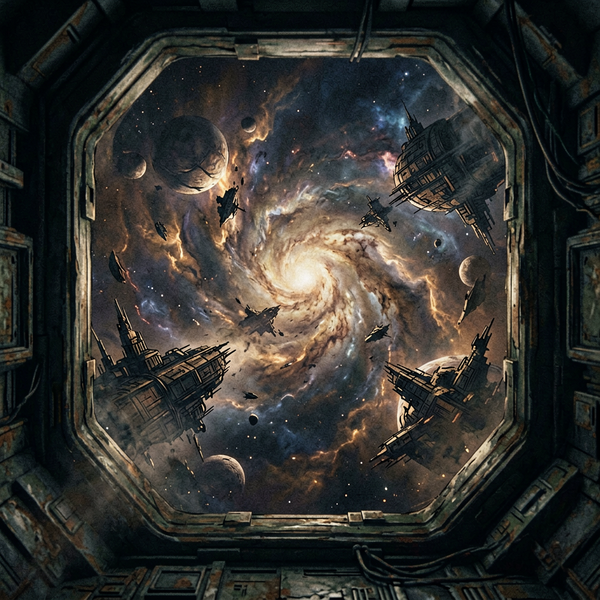
The Stolen Stream Book: Why Temporal Capitalism Is Sci-Fi's Next Big Idea

The Debt That Cannot Be Paid
The Eschendorf family didn't build their dynasty on gold or data. They built it on stolen years — 437 of them, ripped from the timeline and monetized with ruthless precision. That's the brutal premise at the heart of The Stolen Stream: what if time itself became a tradeable commodity, and someone already cornered the market?
Temporal capitalism isn't metaphor in this universe. When Kai Eschendorf stepped into the Stream and emerged 28 days later having aged 437 years, he didn't just break physics — he broke the economic foundation of human existence. The Eschendorfs didn't just accumulate wealth. They accumulated temporal debt, and they made everyone else pay the interest.
What Makes the Stream Different
Most time travel stories ask: what if you could change the past? The Stolen Stream asks something far more unsettling: what if someone else already did — and now they own the timeline?
The science here is grounded in real physics — frame dragging, the Lense-Thirring effect, time dilation's brutal mathematics. But the horror is purely human. It's about debt, power, and what happens when the rich can literally buy more years than you'll ever have. The Stream isn't a portal to adventure. It's a toll road, and the Consortium owns every mile.
The Architecture of Temporal Mechanics
Three structures define this world, and they're not metaphors:
The The Fracture Zone — A geographical wound carved into Worcester, Massachusetts, where time flows at a 10:1 ratio to the outside world. Four hundred years of stolen temporal debt, etched into the fabric of spacetime. People live and die inside the Scar while centuries pass outside its borders.
The 10:1 Temporal Toll — Every jump through the Stream ages the traveler 10 years for every 1 year they spend inside. A biological cost function with consequences that aren't theoretical. Kai Eschendorf paid that toll. His body survived. His humanity didn't.
The Consortium — The corporate entity that discovered how to weaponize the Stream. They don't sell products. They sell access to time itself — and they've calculated exactly what you're willing to pay.
What This Means
The Stolen Stream isn't about going back to fix your mistakes. It's about discovering that someone else already profited from them. For readers who want science fiction that asks uncomfortable questions about economics, power, and inequality — while still delivering the visceral body horror of a temporal jump gone wrong — this is the universe that delivers.
The question isn't whether you can change the past. The question is whether you can afford to live in the present someone else already bought.
More from the The Stolen Stream universe: The Stolen Stream Universe | The Stolen Stream Book 1 | The Stolen Stream Book 2
Related: Stolen Stream Vs Hyperion Time Sacrifice · Temporal Underclass Inequality Temporal Mechanics · Six Laws Of Temporal Mechanics