The Stolen Stream vs. Hyperion: Time and Sacrifice
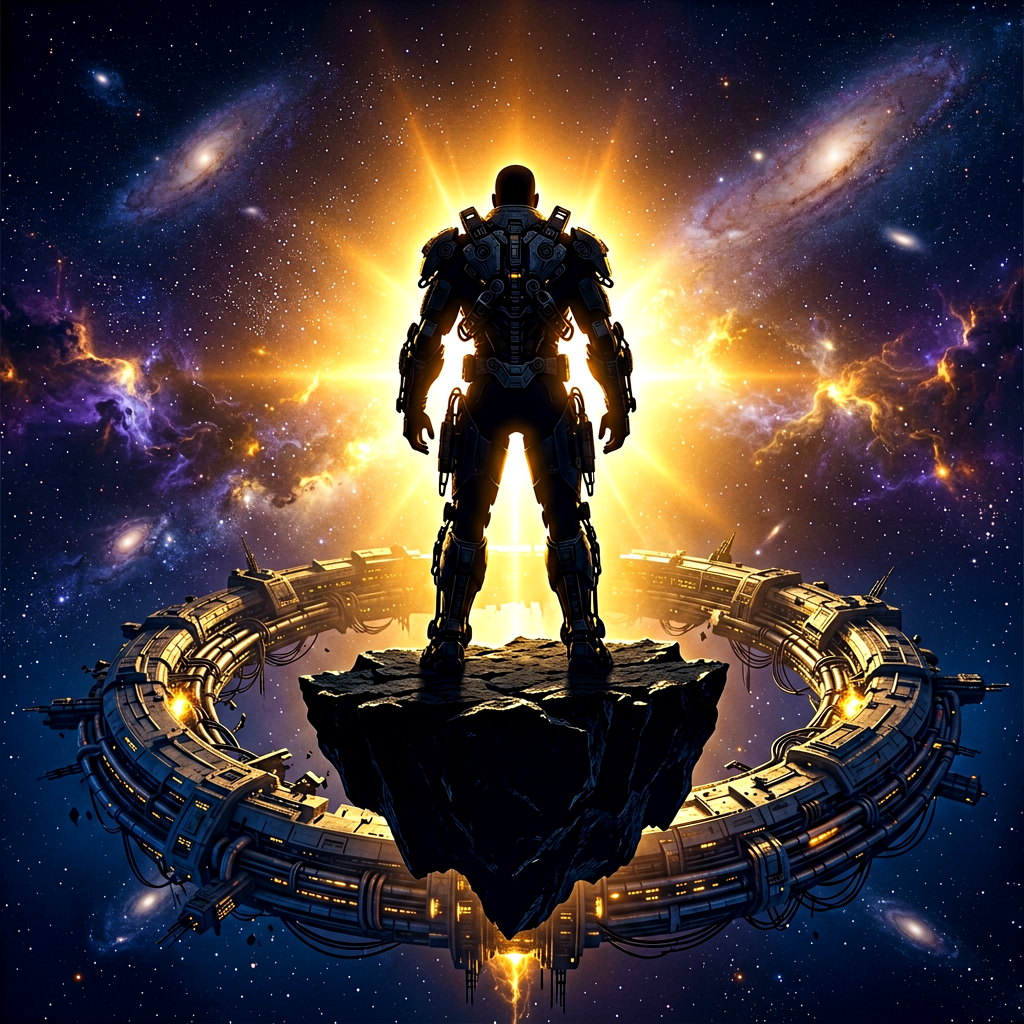
The Stolen Stream vs. Hyperion: Time and Sacrifice
The difference between cosmic terror and systemic accountability is the difference between a monster waiting at the end of time and the bill for what you took to get there. Dan Simmons' Hyperion Cantos and MesoBlack Media's The Stolen Stream both recognize that time is not a resource — it is a test — but they diverge sharply where that test ends: one in the jaws of the Shrike, the other in the marrow of Kai Eschendorf's own bones.
The Pilgrimage: The Time Tombs vs. Stolen Time
Hyperion sends seven pilgrims to the Time Tombs, structures that move backward through time toward the Shrike. Each pilgrim carries a separate tale of grief and guilt, and the narrative blooms into an anthology of linked confessions. The destination is fixed; the journey is a funnel toward a single, unknowable reckoning.
The Stolen Stream sends a single protagonist through 437 years of compressed family history. There is no physical destination — the journey is through stolen time itself. Kai Eschendorf does not travel to a place; he travels through the transactions that built his bloodline. Where Hyperion uses multiple perspectives to orbit trauma, The Stolen Stream uses a single consciousness stretched across centuries, forcing the reader to watch one man pay for decisions he never made. The pilgrimage is not to a tomb — it is to a balance sheet.
The Cost: Cosmic Terror vs. Temporal Debt
In Hyperion, the Shrike is both destination and price. The cost is emotional, spiritual, and usually fatal. The terror is what waits at the end of the timeline — an entity that exists outside chronology entirely.
In The Stolen Stream, the price is measured in biological years. Every temporal jump exacts a 10:1 ratio: the world ages a decade for every year Kai perceives. The ultimate sacrifice is not a single dramatic death but the slow, cumulative expenditure of one's own existence. The terror is not a monster — it is the temporal debt that compounds while you are busy living. Kai does not fear what will meet him at journey's end; he fears the life he will not have lived by the time he arrives.
The Boundaries: Ousters vs. The The Fracture Zone
Hyperion's Ousters are humans adapted to deep space, evolved beyond Earth biology. They represent the outward boundary of humanity — what we can become when freed from gravity.
The Stolen Stream's The Fracture Zone is a region where spacetime itself has been deformed by centuries of temporal extraction. It is the physical consequence of unchecked exploitation — a wound in the universe left by the very systems that gave the Eschendorf family its wealth. The Ousters look outward to the stars; the The Fracture Zone looks inward to the cost of our own systems. One asks what humanity can become. The other asks what humanity has already destroyed to get there.
The Verdict
Hyperion asks: What awaits us at the end of time? The answer is a creature of infinite malice and mystery. The Stolen Stream asks: What have we already done to each other while time was passing? The answer is a biological ledger no one can outrun. For the deeper mechanics of how temporal extraction rewrites identity across generations, see [The Stolen Stream Book 2]. For the full architecture of the timeline and its consequences, see [The Stolen Stream Universe].
Choose your terror: the cosmic or the systemic. Both will cost you everything. Only one will make you pay in years.
More from the The Stolen Stream universe: The Stolen Stream Universe | The Stolen Stream Book 1 | The Stolen Stream Book 2
Related: What Is Temporal Mechanics · 5 Hard Scifi Books Time Travel · Temporal Mechanics Whitepaper